Why names disappear
Mergers, transfers into metropolitan cities, renamings and splits keep changing Korean place names. The older the trip, the likelier the name has changed.
Common old names
| Old name | Today |
|---|---|
| Cheongwon-gun | Cheongju-si (merged 2014) |
| Incheon Nam-gu | Incheon Michuhol-gu (renamed 2018) |
| Masan-si, Jinhae-si | Changwon-si (merged 2010) |
| Incheon Jung-gu, Dong-gu, Seo-gu | Reorganized July 2026 into Jemulpo, Yeongjong, Seohae and Geomdan-gu |
| Gwangju, South Jeolla | Jeonnam-Gwangju Special City (July 2026) |
Gangwon and North Jeolla provinces also became special self-governing provinces.
Finding today’s area
Searching the old name usually brings up today’s area. Where an area was split, use a place you visited (a station, school or beach) to pick the right new district.
Logging it in the app
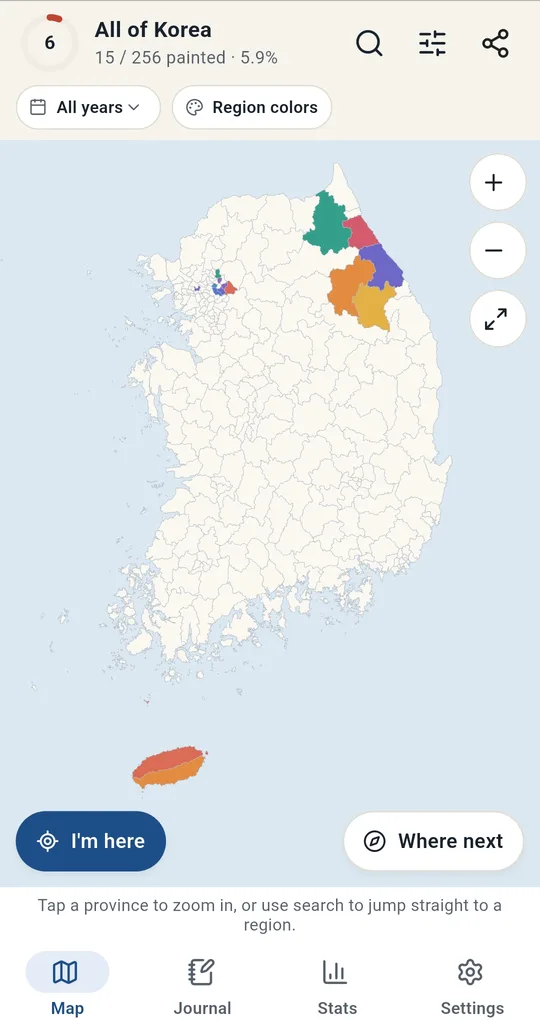
Search by old name
Type an old name like "Cheongwon" into the region search in Korea Visited and it finds today’s area, marked "matched an old name".
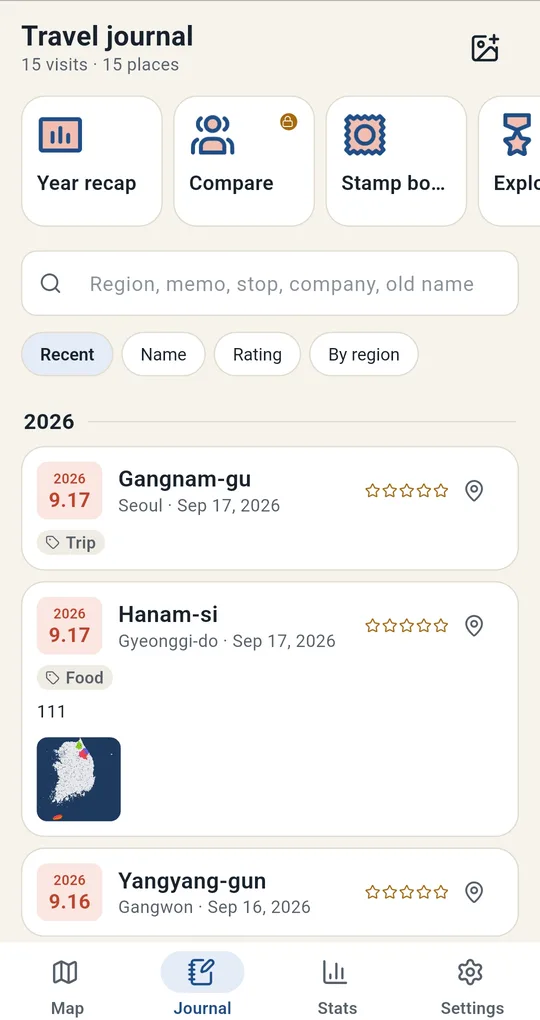
The old name stays with the record
Log a visit with an old date and its card shows "Back then it was …". The journal search finds old names too.
Visited under old names
"Visited under old names" on the Stats tab counts visits made under names that no longer exist.
FAQ
I don’t know the exact year.
Instead of a date you can log a month, year, decade (like the 1990s) or Unsure.
My old backup uses old boundaries.
Older .json backups still restore, and old areas are moved to the new map automatically.
Korea Visited: Travel Map Log
No sign-up, and your trips and photos stay on your phone. Free on Android.