What X-rays do to film
Undeveloped film responds to radiation as well as to light. An X-ray exposes parts of the film that never saw the lens, and when the roll is developed you get:
- An overall haze, or fog
- Bands or wave patterns running along the direction of the conveyor
- Lower contrast, with the blacks lifted to grey
Two things matter here. First, it accumulates — more connections means more passes. Second, faster film is more vulnerable; ISO 800 and above is the usual warning line.
Film that has already been developed, negatives, prints and instant pictures that have finished developing are all unaffected. Only undeveloped film is at risk.
Never in checked baggage
The machines that screen hold baggage are far more powerful than the carry-on ones. They will ruin film regardless of its speed. Treat this as a rule rather than a judgement call — undeveloped film never goes in checked baggage, including a roll still sitting inside a camera.
What changed with CT scanners
The older carry-on X-ray machines were mild enough that slow film usually survived several passes. That changed when CT scanners, which build a three-dimensional image, started appearing at airports in the United States and elsewhere from 2019. They image an object repeatedly from many angles, so the dose the film receives is much higher.
Kodak Alaris and Fujifilm both issued warnings about these machines, saying that film can be damaged by a single pass and that slow film is not exempt.
You generally cannot tell in advance which machine an airport uses. That is why the current baseline for travelling with film is to put it through no scanner at all.
Asking for a hand check
The United States Transportation Security Administration states that you can request a hand inspection of undeveloped film at the checkpoint. Many other countries have a comparable procedure, but practice varies by airport and by officer.
| Preparation | Why |
|---|---|
| Take the rolls out of their cans and boxes into a clear bag | Less time unpacking makes a refusal less likely |
| Rewind and remove any film still in a camera | Inspecting a loaded camera takes much longer |
| Put the fastest film on top | Easy to explain your priority if the queue is tight |
| Allow extra time | A hand check takes time on top of the normal queue |
| Skip the lead-lined pouch | An opaque bag just means more power, or opening the bag |
The request is sometimes refused. If that happens, one pass through the carry-on machine is still far better than putting the film in the hold.
Skipping the checkpoint entirely
If you want the texture of film without the luggage and the checkpoints, the same process can happen on the phone. In the Android app FilmRoll, shooting and developing both finish on the device and the photos never leave it.
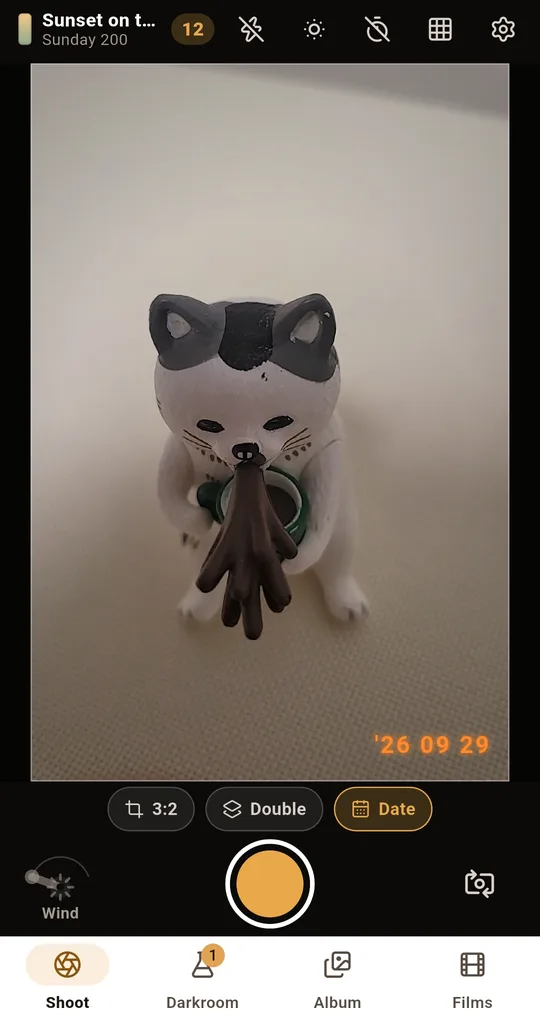
It all works in airplane mode
FilmRoll runs fully offline. You can shoot and develop in flight with the phone in airplane mode; the only thing that uses the network is the banner ad. There is no server and no account.
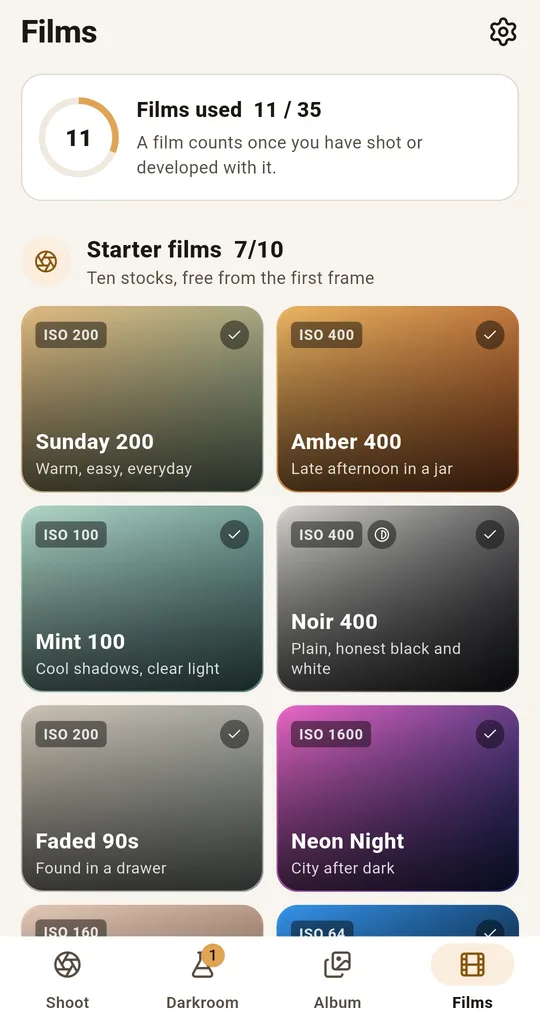
One long roll for the whole trip
The 36-shot roll is described in the app as a whole trip. Name the roll and it is easy to find that trip again later in the album, and a long developing time lets you open everything at once when you get home.
FAQ
Do I have to take the film out of the camera?
If you plan to ask for a hand check, rewinding and removing it first is much quicker. If you cannot, ask for the camera itself to be hand inspected.
Is instant film at risk too?
Instant film that has not been developed is sensitive. Pictures that have already been ejected and developed are fine.
What about several connecting flights?
Passes accumulate, so the more connections you have the more a hand check matters. Another option is to have the film developed where you are and bring home only the negatives or the files.
FilmRoll: 35mm Film Camera
No account, no server, and your photos never leave the phone. Shooting and developing both work in airplane mode. Free on Android.