Gross vs after-tax view
Korea’s DSR (debt service ratio) used in loan screening compares yearly principal and interest with gross income. Payments, though, come out of take-home pay after insurance and tax. If take-home is around 80% of gross, the same payment feels heavier than the ratio suggests.
Outflow-to-take-home ratio
Using the app’s sample values (50M KRW, 2 dependents, 200,000 meal allowance, 300,000 KRW monthly loan interest):
| Item | KRW |
|---|---|
| Gross per month | 4,166,667 |
| Net (pre-loan) | 3,573,254 |
| Monthly loan interest | 300,000 |
| What lands in your pocket | 3,273,254 |
| Interest as share of take-home | about 8.4% |
Principal repayment reduces your debt, so it is different from interest. Run it twice: once with full payments to see what you can live on, and once with interest only to see what is truly gone. The same field works for any fixed outflow such as rent or a regular transfer home.
When rates or exchange rates move
For a variable-rate loan, a 1 percentage point rise adds roughly balance × 1% ÷ 12 per month: about 167,000 KRW on a 200M balance. If you send a fixed amount in your home currency, a weaker won means more won each month; enter the higher won amount to see what remains.
Using the app’s loan field
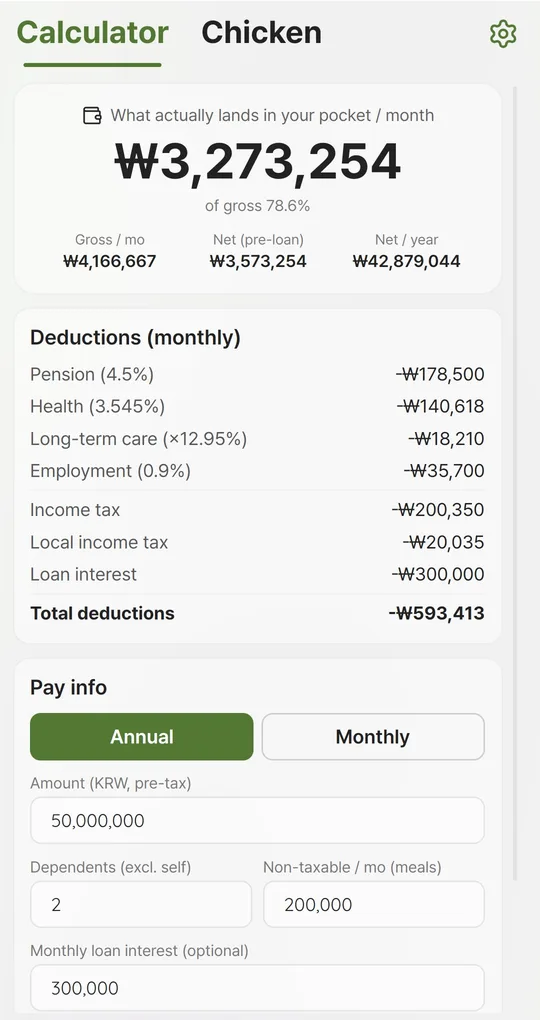
“Monthly loan interest (optional)”
Enter monthly interest, a full payment or another fixed outflow in the last field. The big figure at the top is what remains after it; “Net (pre-loan)” below shows take-home before it.
The Chicken tab uses the same figure
Every number on the Chicken tab is based on take-home after this field. Set it to 0 and compare to see how many chickens a month the outflow costs.
FAQ
Is loan interest deductible at year-end?
Some housing loan interest can be deducted if strict conditions are met. Check NTS guidance; the app does not include it.
What ratio is safe?
There is no single answer. List rent, insurance, phone and savings goals next to it and judge whether what remains covers your life.
Sources: National Tax Service (English)
Salary to Chicken: Take-Home
No sign-up, works offline, and your salary data stays on your phone. Free on Android, in English and Korean.