The today’s-offset trap
New York is UTC−4 today but UTC−5 from November to early March. Convert a winter record with a summer offset and you are an hour out. The US and Europe also switch on different dates, which makes March and late October especially error-prone.
Examples
| Record | Offset that day | In UTC |
|---|---|---|
| 2026-03-06 New York 15:00 | UTC−5 (before DST) | 20:00 |
| 2026-03-10 New York 15:00 | UTC−4 (DST began 8 March) | 19:00 |
| 2026-03-20 London 10:00 | UTC+0 (Europe starts 29 March) | 10:00 |
| 2026-04-01 London 10:00 | UTC+1 | 09:00 |
The two New York records show the same local time four days apart, yet they are an hour apart once converted to UTC.
Timestamps in UTC
Server logs and many systems record UTC rather than local time. A trailing Z or +00:00 means UTC. Converting from UTC to a city is still subject to that city’s DST on that date.
Convert in the app
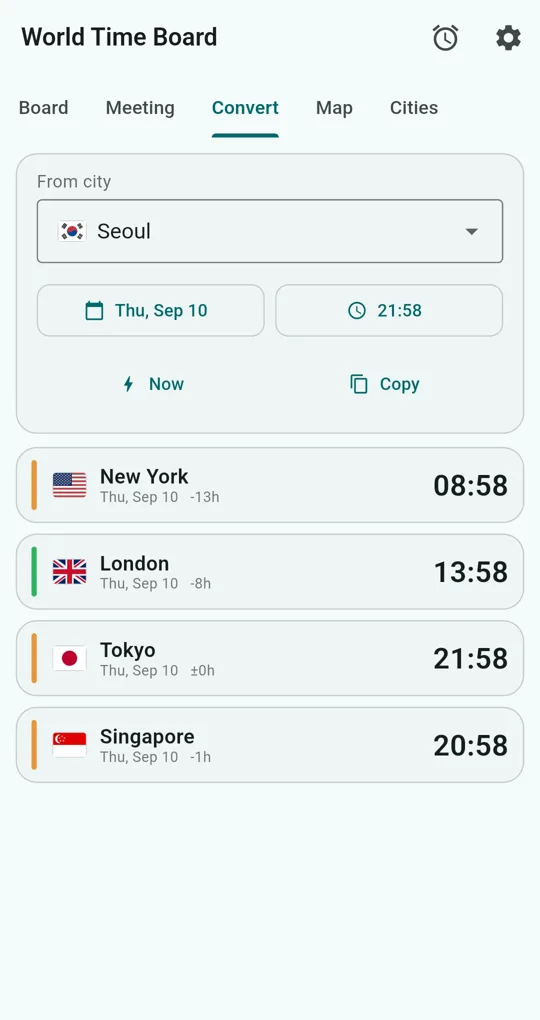
From city, date, time
On the Convert tab of World Time Board, set the From city to where the record was made, then pick the date and the time. Every city you added shows its time and date for that moment, with DST worked out for the chosen date.
Keep the result
Copy puts the source time and every converted time on the clipboard, ready for an expense note or a log.
Dates from 1 January of last year up to three years ahead can be picked. For older records, look up that year’s DST dates separately.
FAQ
What about records from the night the clocks change?
When clocks spring forward an hour is skipped; when they fall back an hour happens twice. For those records, the offset printed on the original is the most reliable guide.
My city isn’t in the From list.
The From city is chosen from the cities you added. Add it on the Cities tab first.
World Time Board - Time Zones
No sign-in, no internet needed, and your city list stays on your phone. Free on Android.