Kitchen experiment
- Fill a clear glass halfway with water and color it with food coloring or juice.
- Slowly pour in cooking oil. Oil is lighter than water and forms a layer on top.
- Sprinkle a spoonful of salt from above. It sinks through the oil into the water and dissolves.
- Put a lid on, shake, then wait: it separates into two layers again.
It separates again because water and oil do not mix, and each settles in order of how heavy it is for its size (density).
Density order in the game
Sandlab gives every element a density value and lets heavier things sink below lighter liquids and gases.
| Position | Elements |
|---|---|
| Rise (gases) | Fire, Smoke, Steam, Spark |
| Float on water | Oil, Acid, Ash |
| Water | Reference |
| Sink in water | Snow, Seed, Lava (turns to stone on contact), Gunpowder, Slime, Sand, Concrete (turns to stone on contact) |
| Dissolves away | Salt |
| Fixed solids | Stone, Wood, Ice, Plant, Metal, Glass, Coal |
Spot the difference
Games simplify reality to stay fun. Ask your kids: "Where is this different from the real world?"
| In the game | In reality |
|---|---|
| Snow sinks in water | Snow and ice are lighter than water and float |
| Ice hangs in the air as a fixed solid | Ice falls, and floats when you put it in water |
| Salt vanishes in water and the water stays the same | Salt dissolves, the water tastes salty and salt water is heavier than fresh water |
| A seed in water sprouts almost at once | Sprouting takes days and needs the right temperature and air |
Try it in the app
Fill with water in one tap
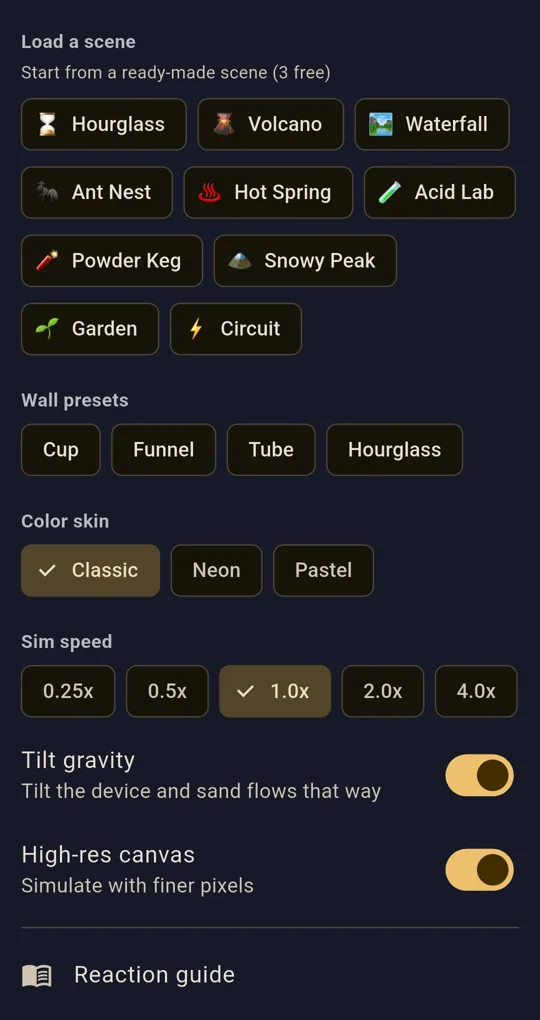
In Sandlab, draw a cup in stone or stamp the Cup wall preset. Tap the empty space inside with the Fill tool and the whole connected empty area fills with water at once. If the inside connects to the outside, the outside fills too, so close the cup first.
Predict before each drop
Before adding oil, sand, ash or salt one at a time, have your child say "float or sink?" first. Count correct guesses and it becomes a quiz. Add a seed and a plant grows along the water, taking its place (Seed is a premium element).
Watch the water cycle
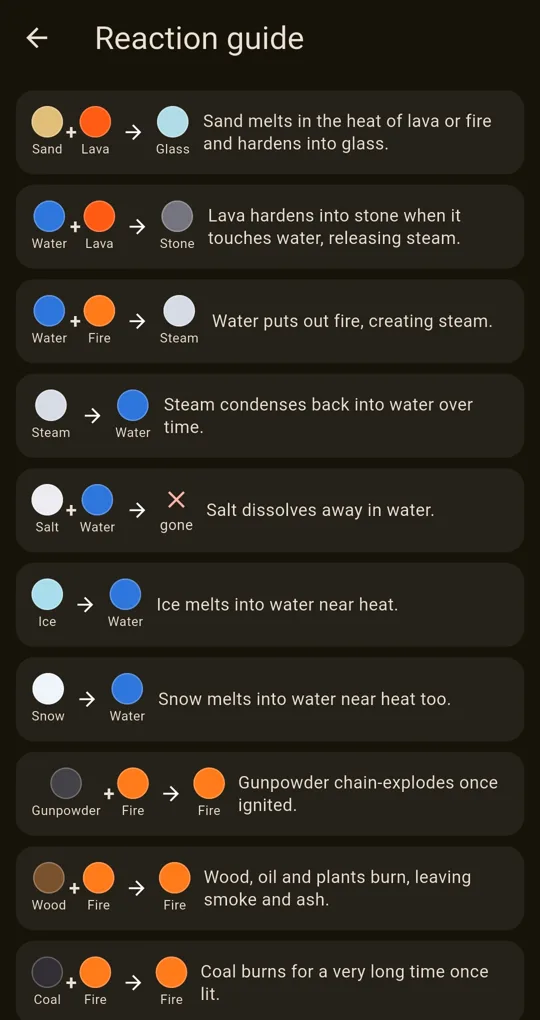
Touch fire to the water in the cup and some of it turns to steam and rises. Over time steam condenses back into water and falls. Evaporation and rain on one screen.
FAQ
What age is this good for?
The app is rated for everyone. Rubbing the screen is all it takes, so young children can play, but the prediction quiz works best once they can read the element names.
Will my kid see ads?
There is a bottom banner ad. Watching one short ad hides the banner for 24 hours.
Sandlab - Falling Sand Physics
No sign-up, and the simulation runs fully offline. Your canvases stay on your device. Free on Android.