15-minute checklist
| Check | How |
|---|---|
| Window insulation | Measure in the bedroom for two minutes with windows shut, then two minutes open. A small difference may mean the windows do not block much. |
| Roads and rail | Is the bedroom on the street side or the courtyard side? |
| Elevator and stairs | Is the elevator shaft behind the bedroom wall? |
| AC units | Are yours or a neighbor’s right outside the bedroom window? |
| Floors and ceiling | Stand still for a minute and listen for upstairs footsteps. |
Use readings to compare the homes you see, not to grade one in isolation. Same phone, same method.
What to ask
- Ask the agent or current tenant whether there have been noise complaints.
- Any planned construction or roadworks nearby.
- When garbage collection and delivery vans come.
- What quiet hours the lease or building rules set.
Curious how legal noise limits work? See legal decibel limits for neighbor noise.
Come back in the evening
Before signing, try to spend ten minutes outside the building or in the hallway on a weekday between 8 and 10 pm. Commuter traffic, shops and neighbors can sound nothing like the afternoon.
Logging it in the app
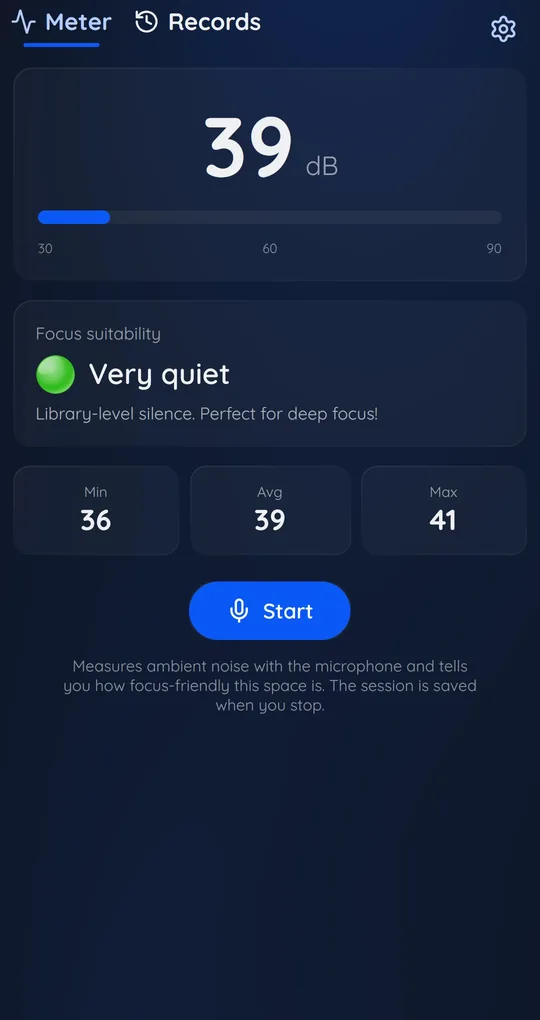
Measure in each bedroom
Put Focus Noise Meter by the bedroom window and tap Start. Save windows-shut and windows-open as separate sessions.
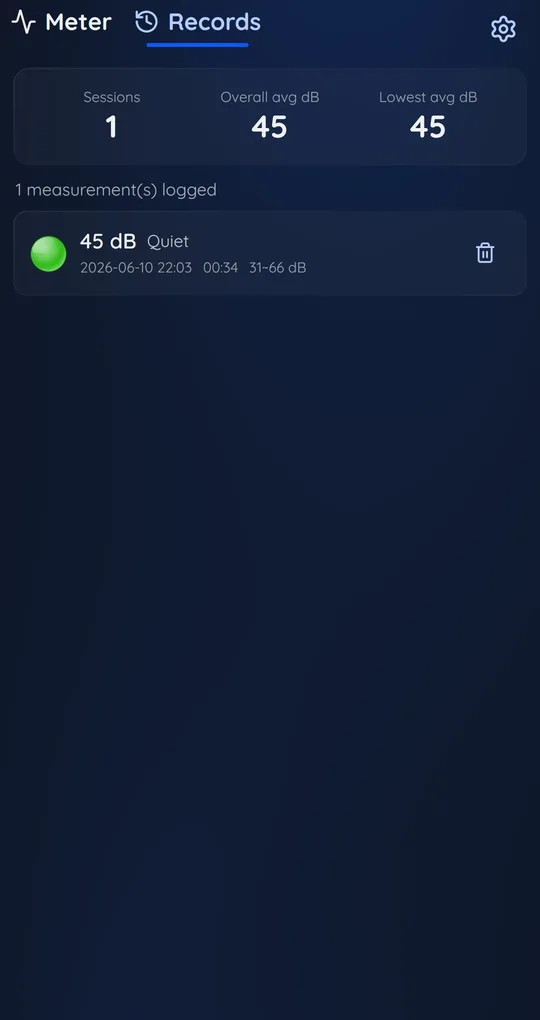
Compare homes in Records
Session times tell the homes apart. A quick note like "14:05 Elm St, shut" avoids confusion later. Delete sessions you do not need with the trash icon.
FAQ
Will the landlord mind?
The app does not record audio, only levels. It is still polite to ask first.
How big a difference matters?
With the same phone and method, even a few dB is a useful comparison. A 10 dB difference is commonly described as sounding about twice as loud.
Focus Noise Meter - dB Sound Level
It never records audio, only calculates dB levels, and your history stays on your phone. Free on Android.