Why clock-based 16:8 does not fit
Night work moves your active hours into the night. In shift-worker studies, the main goal is usually to cut eating in the small hours and keep daily eating within a consistent span. A similar window every day and an empty stomach in the small hours matter more than hitting exactly 16 hours.
Example windows by shift type
| Shift | Example window | Focus |
|---|---|---|
| Fixed day shift | 08:00–18:00 (10 hours) | Just finishing dinner early is plenty |
| Night shift (22:00–07:00) | Dinner before work + early-shift snack → fast through the small hours → light meal after work, then sleep | Avoid eating in the deepest night hours |
| 24-hour shifts | Wider window on duty days (for example 12 hours), normal on days off | On duty, just log; do not push |
| Rotating shifts | Skip fasting on the first day of a new rotation | Recover sleep first |
Plan sleep first, then place meals around it. See night shift sleep schedule. If you feel drowsy or unfocused at work, safety beats fasting, especially if you drive or operate machinery.
What shift-worker research shows
A randomized trial in US firefighters on 24-hour shifts (2022, 137 completed 12 weeks) found a 10-hour eating window feasible. Participants cut their eating span from about 14 to 11 hours on average, some measures such as diastolic blood pressure improved, and weight change was around 1 kg. It is a useful reference because it tested a looser 10-hour window rather than 16:8.
Logging around your roster
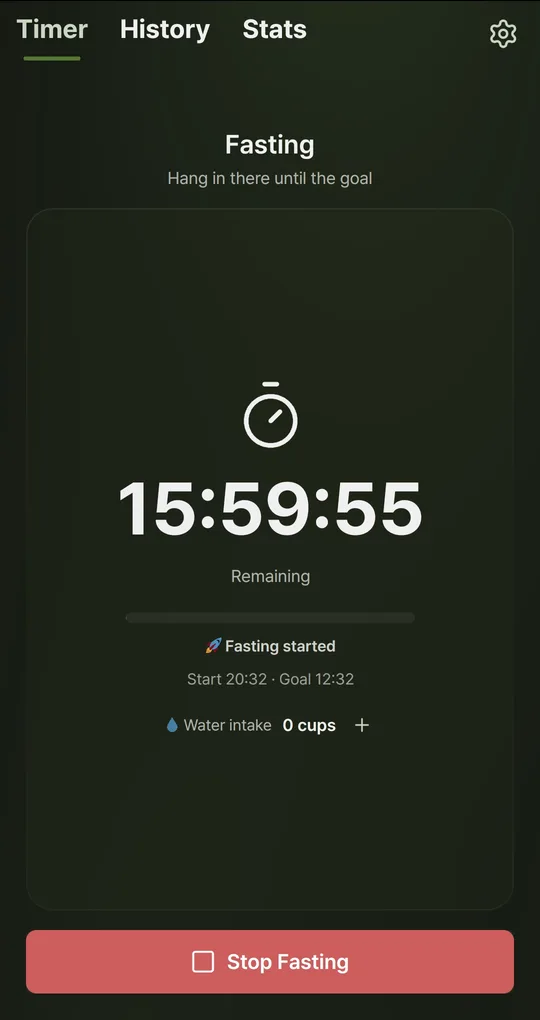
On duty days, log rather than chase the goal
The presets are 16:8, 18:6, 20:4 and 24h. If 16 hours is too much on a work day, start 16:8 and stop when you need to. A short fast is simply marked "Under Goal"; it still counts in your history.
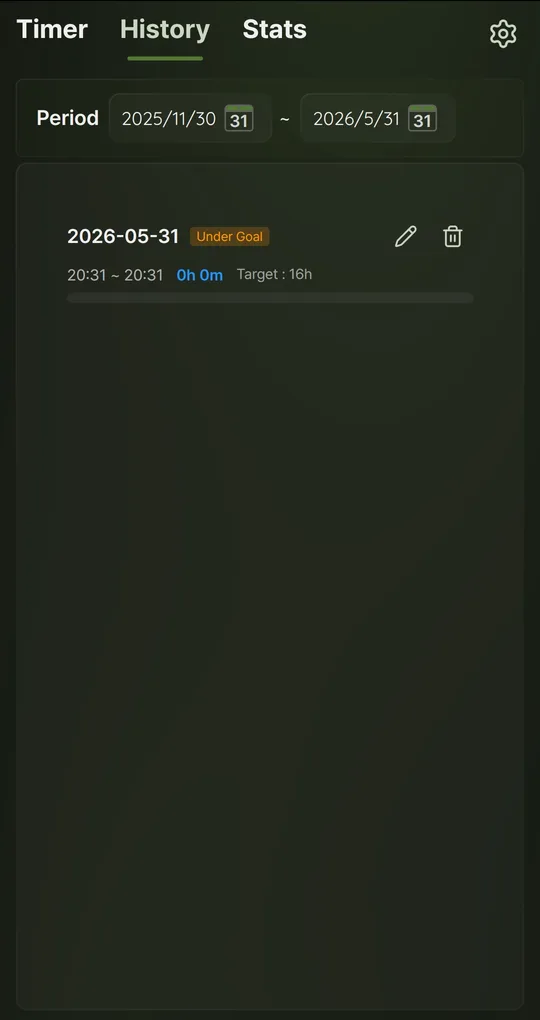
Change the target to 10 or 12 hours
In the History tab, tap the pencil (Adjust times) on a record and change "Target duration (hours)" to, say, 12. The record is then judged against 12 hours and appears as "12h" in the Stats preset breakdown.
Do not worry about the streak
The streak only continues if a goal-reaching fast ends on every single day. Rotating shifts will break it, so focus on "Average duration" and "Fasts per month" in Stats instead.
FAQ
Should I push through hunger on a night shift?
No. Low focus at work is a real risk. Have a snack early in the shift and only avoid the deepest night hours.
Can I do a long fast on days off to make up?
Stacking a long fast on top of shift-work sleep debt is hard on the body. Use days off to recover sleep first.
Sources: Manoogian et al., Cell Metab 2022 (firefighters, 10-hour eating)
Intermittent Fasting Timer: 16:8 Diet & Fasting Log
No sign-up, works offline, and your fasting log stays on your phone. Free on Android, in English and Korean.