Why fires start
Power banks and small devices with built-in batteries, such as handheld fans, are sensitive to pressure and impact. In a trash bag or plastic bin they can be crushed or torn during collection and sorting. Lighters and gas canisters are risky for the same reason when gas is left inside.
Where each goes
| Item | Where it goes | Note |
|---|---|---|
| Power bank, battery-powered small device | E-waste or battery collection bin | Never trash bag or plastic bin |
| Household / rechargeable batteries | Battery collection bin | Community centers, apartments |
| Gas canister, spray can | Cans & metal | Completely empty first |
| Lighter | General waste | Only after all gas is out (app guidance) |
| Fluorescent tube | Lamp collection bin | Unbroken. Contains mercury |
What changed in 2026
On September 30, 2026, Korea’s Ministry of Climate, Energy and Environment announced 8,000 more collection bins for battery-containing e-waste by year end, for about 63,000 nationwide. It also said bins installed by local governments would be added to online maps from October, alongside those of the national e-waste collection body. Check your district or an online map for the nearest one.
Check in the app
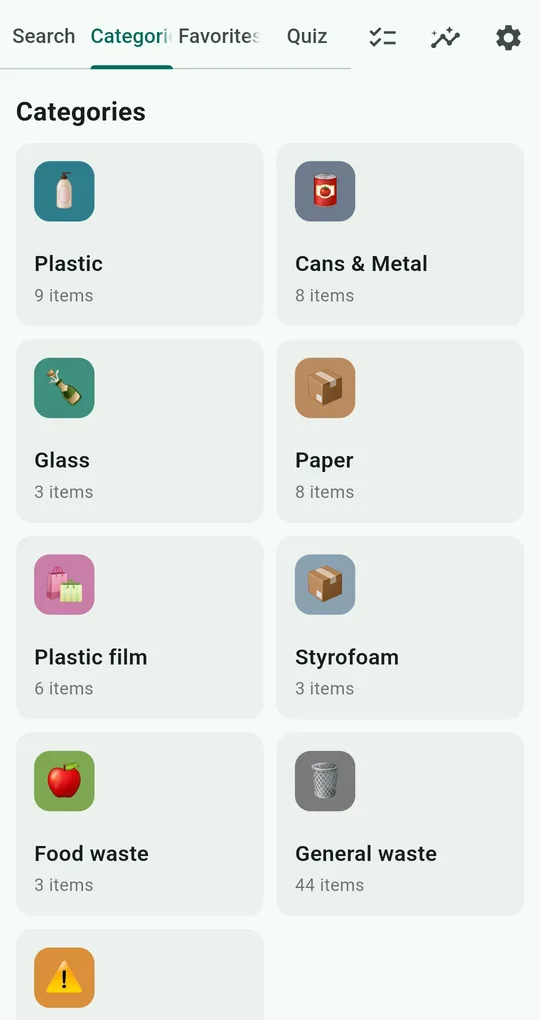
Bulky / Special category
In Waste Sorting Guide, the Bulky / Special card at the bottom of Categories collects the items that need a dedicated bin or booking: batteries, power banks and lithium batteries, fluorescent lamps and more.
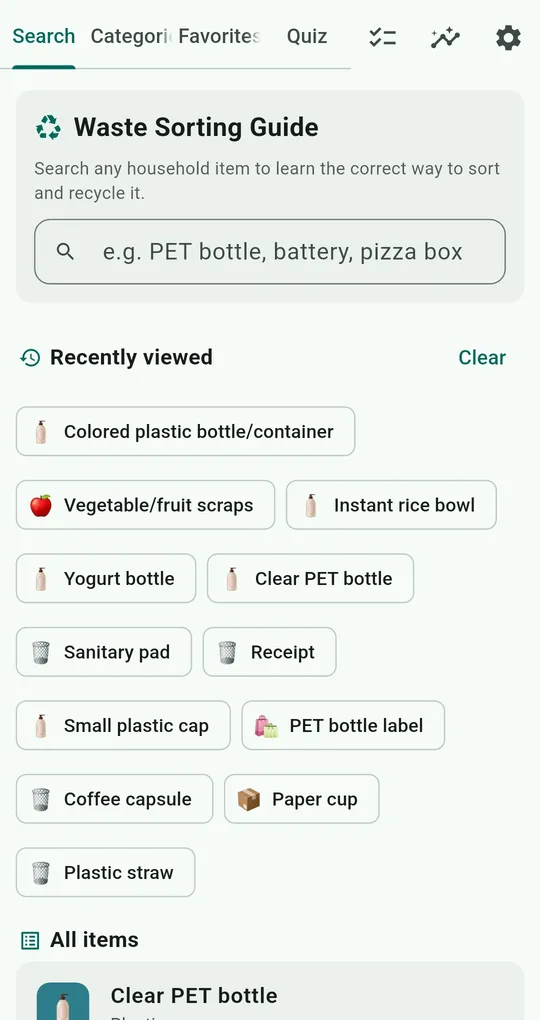
Search before you toss
Not sure if something has a battery inside? Search it. Results show the category at a glance, and the item screen explains why it’s restricted.
FAQ
What about a swollen battery?
Don’t press or puncture it. Ask your district office or community center how to hand it in before putting it in any bin.
Do I need to remove the battery from a handheld fan?
Many can’t be opened. Put the whole device in an e-waste or battery bin.
Waste Sorting Guide - Recycle
Search offline, no sign-up. Free on Android.