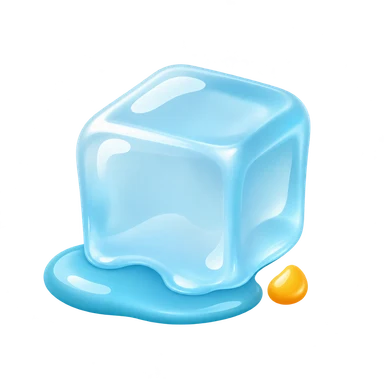
It starts with one ice cube. 8 g, -18 °C. Tap and heat goes into that spot, then spreads to the cells next to it. Buy gear with the meltwater, melt bigger ice. Waiting at the end is the Oort cloud.
The ice is divided into cells. The cell you tap warms up, and that heat spreads to its neighbors. This is not a clicker where tapping anywhere on screen does the same thing.
37.6 kJ to warm 1 kg from -18 °C to 0 °C, then 334 kJ more to melt it — 9 times as much. So the thermometer stops at 0 °C and the long melt begins. Textbook values, as-is.
Heaters only run on the grid, and you can drag them. Once the bottom hollows out, moving them pays off. A candle outside the ice is 7.6× slower; an auto mount makes it 2.4× faster.
1–3 per chunk. As the ice around them thins, a silhouette shows through. Finding the rock core early speeds up everything after.
Output drops only by the shortfall. Electricity-to-heat tops out at 100% — only the heat pump goes past it, by pulling heat in from outside.
Every one of 24 stages has its own shape. Baikal is a crescent, the comet nucleus a peanut, Uranus's rings stand upright (98° axial tilt).
Refreezing grants snowflakes; upgrades bought with them stay forever. Heaters keep running while the app is closed, settled when you return.
The internet is used only for ads. Game records are saved on the device only and never sent to a server.
Each chunk feels different: a -200 °C comet nucleus spends more than half its time just warming up, while -2 °C drift ice spends only 1%.
24 ice stages · 42 relics · real SI units all the way to QJ.
📲 Get it on Google Play